 FlorianandClaude Opus 5
b6b23bd423
Eight environments were still pinned to espressif32@6.1.0 (arduino-esp32
2.0.7 / IDF 4.4) while the rest of the tree had moved to the shared
${com.esp32_platform} definition. Align them so they build against the
platform that actually ships, rather than silently keeping an old
toolchain alive:

  esp32doitv1-aithinker-r01-sx1278
  esp32dev-rtl_433, esp32dev-rtl_433-fsk
  heltec-rtl_433, heltec-rtl_433-fsk
  lilygo-rtl_433, lilygo-rtl_433-fsk
  esp32dev-multi_receiver

The stray "* copy.c" duplicate in rtl_433_ESP that previously blocked
these envs on a modern toolchain is gone as of rtl_433_ESP v0.6.0, which
development already pulls in, so no build workaround is needed.

The move alone is not sufficient: the newer core leaves ~35 KB less heap
on BT-less ESP32 builds, which pushes the memory-constrained RTL_433
boards into a boot loop at the first TLS handshake. That is fixed here
too, in main.cpp.

On ESP32-classic builds without ZgatewayBT, arduino-esp32 3.x leaves most
of the Bluetooth controller's reserved DRAM (CONFIG_BTDM_RESERVE_DRAM =
0xdb5c, 56156 B) stranded. arduino-esp32 2.x released the whole BTDM
region unconditionally in initArduino():

    if (!btInUse()) esp_bt_controller_mem_release(ESP_BT_MODE_BTDM);

3.x releases CLASSIC and BLE separately, and the CLASSIC pass silently
short-circuits. cores/esp32/esp32-hal-bt.c has:

    #if defined(CONFIG_BT_CLASSIC_ENABLED)
    static bool _classicMemReleased = false;
    #else
    static bool _classicMemReleased = true;  // "No Classic BT on this chip"
    #endif

With a BLE-only controller build CONFIG_BT_CLASSIC_ENABLED is unset, so
_classicMemReleased starts true and btMemRelease(BT_MODE_CLASSIC_BT)
returns "already released" without reaching IDF. Only the ~5 KB BLE slice
is freed. The guard is wrong for this part: ESP32 does have Classic BT
hardware (CONFIG_SOC_BT_CLASSIC_SUPPORTED) and the DRAM is reserved
regardless of the controller's configured mode; the correct guard would be
CONFIG_SOC_BT_CLASSIC_SUPPORTED. Reported upstream separately.

Release the whole BTDM region explicitly. esp_bt_mem_release() is used
rather than esp_bt_controller_mem_release() because it is a superset that
also frees the linker _bt_data / _bt_controller_* sections. The guard is
compile-time and authoritative: OMG knows via ZgatewayBT whether it uses
BT, whereas the core infers it from link-time flags that NimBLE-Arduino
does not set. Safe no-op if the memory was already released or once the
core is fixed. Note this makes btStart() permanently unavailable in these
builds, which is already the case for a !ZgatewayBT build.

Measured on a Heltec WiFi LoRa32 V2 running heltec-rtl_433 (WiFi + MQTT +
TLS + rtl_433 + SSD1306, no BT), pioarduino 55.03.39 / esp32-arduino-libs
0.1.8:

  BT DRAM reclaimed: 209928 -> 245048        (+35120 B)
  Update check, free heap: 49868 -> 89484

Without it, the boot-time HTTPS update check fails its TLS handshake
("Dynamic Impl: alloc(4437 bytes) failed", then X509 -9984) because the
largest free block is too small, and the MinimumMemory watchdog then
reboots the board in a loop. With it: no allocation failure, handshake
succeeds, freemem ~85 KB / minmem 53432 against the 40000 threshold,
0 reboots over a 3 min soak with live RTL_433 decodes.

The memory fix affects every ESP32-classic env without ZgatewayBT, not
just the ones moved here. The RTL_433 envs fail loudly because they carry
the MinimumMemory watchdog; others (esp32dev-ir, esp32dev-pilight,
ttgo-lora32-v21, heltec-wifi-lora-32, ...) simply run ~35 KB short.
Builds with ZgatewayBT are unaffected.

Hardware validation, two boards:

  heltec-rtl_433 (OOK 433.92 MHz, Heltec WiFi LoRa32 V2)
    boots, joins WiFi/MQTT, RadioLib/SX127x RSSI calibration completes,
    HA discovery publishes, decodes live ambient sensors
    (Ambientweather-F007TH, Prologue-TH, WEC-2103).

  heltec-rtl_433-fsk (FSK 915 MHz, second Heltec)
    same boot path, decodes a live Fineoffset-WH51 soil sensor.

The other six envs have no matching board on hand and are compile-only.

Co-authored-by: Claude Opus 5 <noreply@anthropic.com>


OpenMQTTGateway aims to unify various technologies and protocols into a single firmware. This reduces the need for multiple physical bridges and streamlines diverse technologies under the widely-used MQTT protocol.
Sponsors

Documentation
The documentation is here
New to OpenMQTTGateway? Follow the Getting Started guide to flash a board from your browser and see your first sensor data in about 15 minutes.
The reference sheet, with the list of all functions, pinouts is here
Upload
Upload OpenMQTTGateway directly from the upload page (no additional software required) or build your own configuration with PlatformIO.
Using OpenMQTTGateway ?
Support open-source development through sponsorship, it helps keep the project healthy and evolving.

Products powered by OpenMQTTGateway
Theengs Bridge, Bluetooth gateway (BLE) with external antenna
Theengs bridge is a powerfull BLE to MQTT gateway for over 100 sensors. Equipped with an Ethernet port, and external antenna, ensuring an enhanced range for your BLE sensors. It supports also WiFi connectivity.

Theengs Plug, Bluetooth gateway (BLE) gateway and Smart Plug
Theengs plug brings the following features:
- BLE to MQTT gateway, tens of Bluetooth devices supported thanks to Theengs Decoder library. The plug uses an ESP32 acting as a BLE to Wifi gateway to scan, decode and forward the data of the nearby sensors,
- Smart plug that can be controlled remotely,
- Energy consumption monitoring,
- Device tracker,
- Presence detection (beta),
- Local connectivity first.
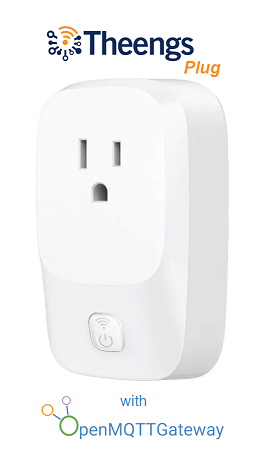
Support the project by purchasing the Theengs bridge or the Theengs plug
Compatible items
-
List of supported BLE devices, thermometers, scales, plant sensors, beacons...
-
Boards guide, RF Bridge, IR, BLE gateways...
Running on a computer If you want to use the BLE decoding capabilities of OpenMQTTGateway with a Raspberry Pi, Windows or Unix PC you can now leverage Theengs Gateway.
- Parts to build your gateway, DHT, RF, IR emitters and receivers...
Compatible controllers, saas or software
Contributors ✨
Thanks goes to these wonderful people who helped OpenMQTTGateway on Github and to the users contributions into the community.
Support
For Questions or Support please don't open an issue, first go to the docs and if you don't find your answer there, you can post your question in the community forum
Help
If you like the project and/or used it please consider supporting it! It can be done in different ways:
- Helping other users in the community
- Contribute to the code or the documentation
- Donate or sponsor the project developers
- Make a video or a blog article about what you have done with OpenMQTTGateway and share it to the community
Media
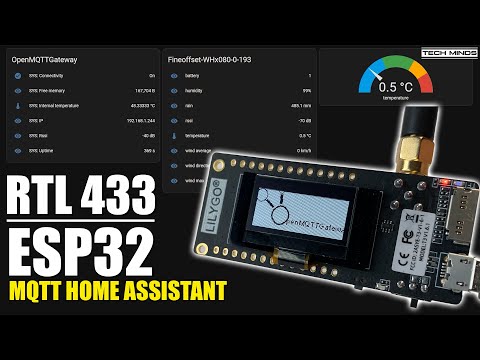
- Hackaday - ARDUINO LIBRARY BRINGS RTL_433 TO THE ESP32
- CNX Software - 433 MHz is not dead! Using an ESP32 board with LoRa module to talk to 433 MHz sensors
- RTL_433 PORTED TO ESP32 MICROCONTROLLERS WITH CC1101 OR SX127X TRANSCEIVER CHIPS
- Using low-cost wireless sensors in the unlicensed bands
- SMART PLUG ESP32 OPENMQTTGATEWAY SERVING AS AN BLE MQTT GATEWAY AND A POWER METER
Theengs Plug
433Mhz and BLE

BLE
433Mhz
LORA